
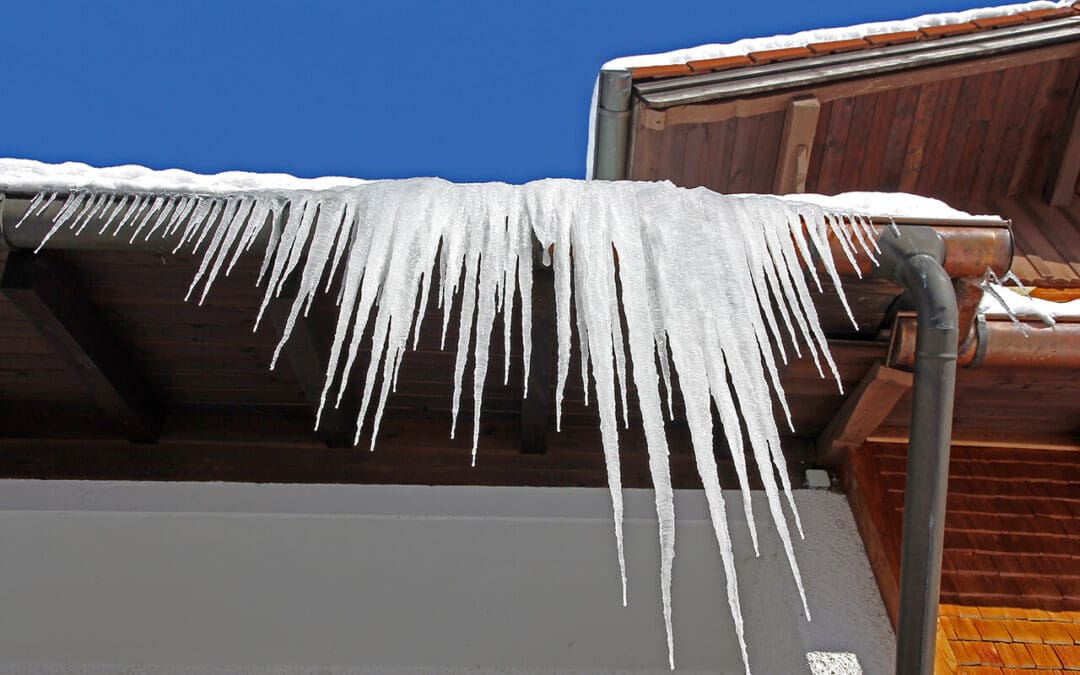
That row of icicles hanging from the roof edge looks picturesque, but it’s often a sign of a problem happening above. In a typical ice dam, heat escaping from the living space warms the roof, melts the snow, and sends the water running downhill until it refreezes at the cold eaves. The ice builds a ridge that traps more meltwater behind it, which can back up under the shingles and leak into ceilings and walls. The good news is that you can prevent ice dams by fixing the cause, and late fall is the perfect time to start.
How to Prevent Ice Dams by Stopping Heat Loss
A roof that stays uniformly cold doesn’t melt snow unevenly, so the goal is to keep the heat in the house where it belongs. Start by air sealing the attic floor, because warm air leaking up through gaps does far more damage than heat passing through insulation. Common culprits include the attic hatch, recessed lights, bathroom fan housings, chimney chases, and gaps around plumbing and wiring that pass through the ceiling. Seal them with caulk or expanding foam rated for the application, and use fire-safe materials around chimneys. Once the leaks are sealed, add insulation to recommended levels so the attic stays cold and the roof deck stays close to outdoor temperature.
Prevent Ice Dams By Addressing the Attic
Ventilation is the second half of how you prevent ice dams, because it carries away whatever heat still gets through. Look for soffit vents under the eaves and a ridge vent along the peak, so cold air can enter low and warm air can exit high. It’s common to find insulation stuffed against the roof edge, blocking the soffit vents completely. Installing rigid baffles at each rafter bay keeps an air channel open above the insulation. Sealing and ventilation work together, and both cost far less than repairing a stained ceiling and wet insulation.
Gutter Care and Snow Removal
Clean gutters and downspouts after the leaves drop so meltwater has a clear path away from the roof. After a heavy snowfall, use a roof rake with an extendable handle to pull snow off the lowest few feet of the roof while you stand safely on the ground. A rake with a rolling or smooth edge protects the shingles. Less snow near the eaves means less to melt and refreeze. Never climb onto an icy roof, and don’t chip at existing ice with a hammer or axe, which can damage shingles and cause serious injuries.
If an Ice Dam Forms Anyway
Even well-prepared homes may see ice dams during an unusual cold snap. Warning signs include large icicles, ice building along the eaves, water stains on upstairs ceilings, and damp insulation. To buy time, fill a nylon stocking with calcium chloride ice melt and lay it across the dam so it melts a channel for water to drain. Avoid rock salt, which could damage shingles and landscaping. For larger dams, hire a roofing professional who uses low-pressure steam, and have the attic checked afterward to find where the heat is escaping. Take photos of any damage in case you need to document it for an insurance claim.
House Whisperer Inspections and Construction LLC provides home inspections in the Greater Finger Lakes area, including Cayuga, Cortland, Schuyler, Seneca, Tioga, and Tompkins counties. Contact us today to schedule our services.