
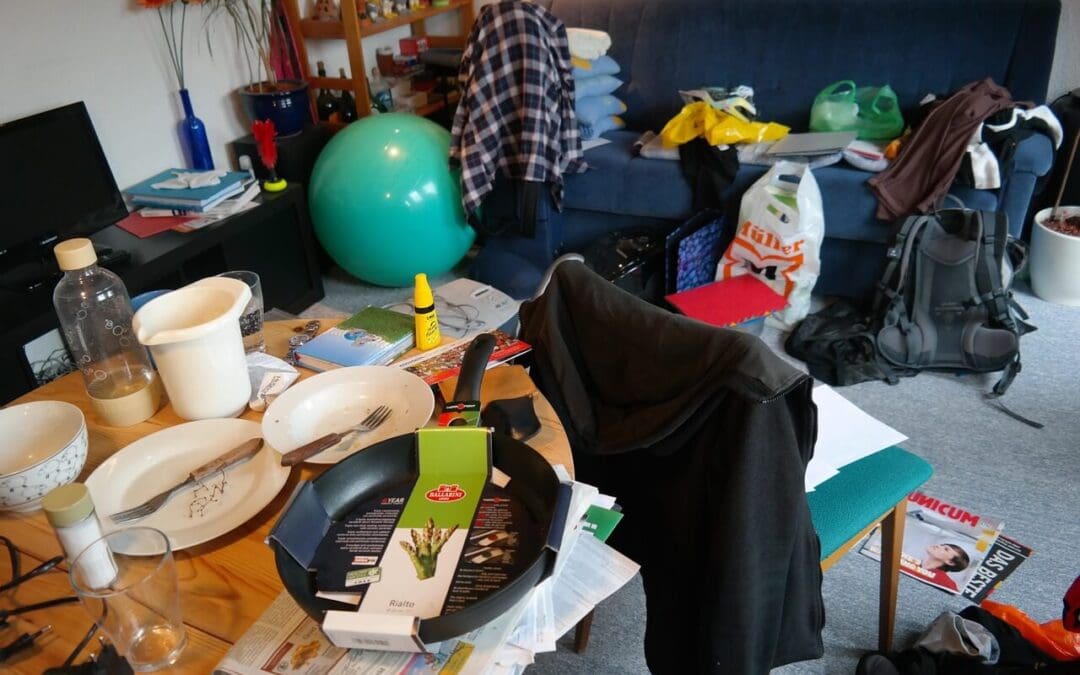
Decluttering your home sounds simple until you’re standing in front of a closet full of things you neither use nor want but can’t quite bring yourself to remove. The physical act of sorting and discarding is straightforward. The decision-making is what stops most people. Understanding why those decisions feel difficult is what makes the process finally move forward. Decluttering your home isn’t fundamentally a tidying project. It’s a series of small decisions made about objects that have accumulated meaning, guilt, money, or memory attached to them, and the approach that works is one that accounts for that reality rather than ignoring it.
The Mindset That Makes Decluttering Your Home Actually Work
Most decluttering advice starts with a location, tackle the kitchen first, then the closet, then the garage. A more effective starting point is a question: what does this space need to do, and what currently in it is preventing that? Decluttering your home one category at a time, rather than one room at a time forces an honest inventory of total volume that room-by-room approaches allow you to avoid. Seeing every item in a category gathered together produces a clarity about quantity that makes decisions easier rather than harder.
Decluttering Your Home Means Addressing the “Someday” Items
The objects that are hardest to remove while decluttering your home fall into a predictable category: the things kept for someday. The exercise equipment that will be used again, the hobby supplies for the project that hasn’t started, the clothing that fits the person you plan to become. Someday items are the ones that require the most honest assessment, not of the object, but of the gap between the life currently being lived and the one being imagined. An item that has been kept for someday for more than a year is almost always an item that someday has already passed for. Releasing it doesn’t close the door on the aspiration; it clears the space for what’s actually happening now.
The Role of Guilt in Slowing Down
Gifts, inherited items, and expensive purchases that didn’t deliver on their promise are the categories where guilt is the primary reason for retention rather than utility or affection. Keeping a gift out of obligation to the giver rather than because it adds anything to the home is a common pattern in decluttering your home that produces collections of items the homeowner neither wants nor needs. The guilt associated with releasing these items dissolves quickly once the decision is made; the anticipatory discomfort is almost always greater than the experience of letting go.
The practical resolution for guilt-retention items is to find them a use somewhere else: a donation to an organization that will put the item to work, a person in the network who would genuinely value it, or a consignment sale that converts guilt into something useful. Decluttering your home doesn’t require discarding everything; it requires honest accounting of what’s actually serving the household and what’s just occupying space that could do something better.
House Whisperer Inspections and Construction LLC provides home inspections in the Greater Finger Lakes area, including Cayuga, Cortland, Schuyler, Seneca, Tioga, and Tompkins counties. Contact us today to schedule our services.